English| EUR
Suggested for you
More currencies
Choose a language
Copenhagen's cooking schools are small, chef-led and reserved by the session rather than wandered into. Expect specifics rather than adjectives.
Quick answer
Classes are scheduled appointments, so the 09:00–17:00 arrival window matters more than walk-in luck.
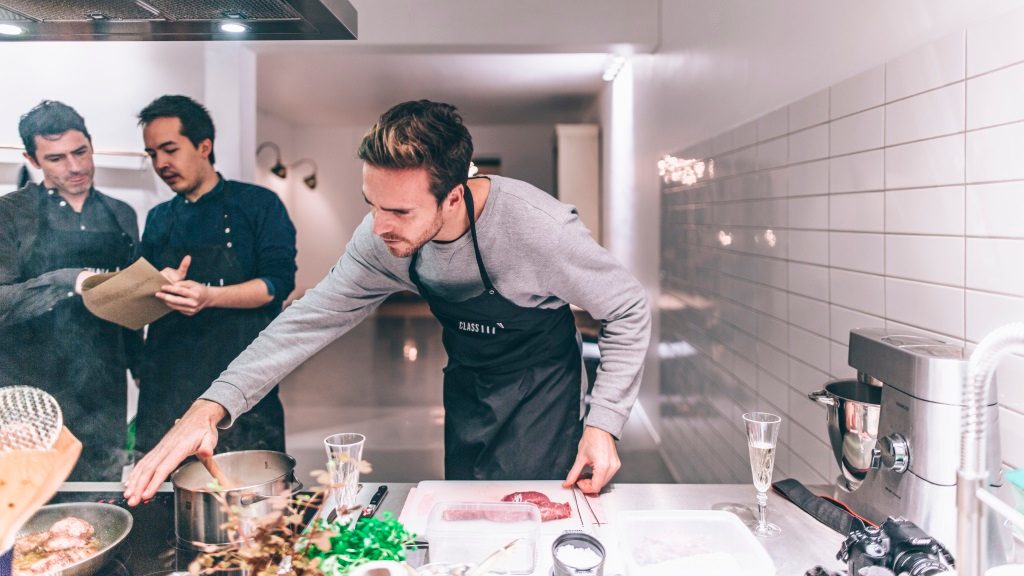
— a first-floor kitchen rather than a restaurant front, tucked into the quiet grid of streets behind Copenhagen's harbourfront. That detail explains much about how the best cooking class Copenhagen search tends to resolve. The city's strongest sessions are not venues with turnstiles. They are working kitchens that seat a small group, hand out aprons, and run on a timetable set weeks ahead. Visitors arrive expecting an attraction. They find a classroom with knives. Copenhagen's reputation for food was built on fermentation cellars, foraged herbs and the New Nordic manifesto, and the teaching kitchens inherited that vocabulary. A typical madlavningskursus i København moves through mise en place, knife work, and a shared table at the end. Menus lean Danish: rye bread, smørrebrød toppings, pickled vegetables, a dessert built on dairy and berries. Across the city, some sessions begin with a market walk through Torvehallerne or a harbour fishmonger before the chopping starts. Others stay put and work from crates already delivered. Neither format is better. They suit different appetites. Nothing here requires prior skill; the chefs assume none. Choosing well is less about ranking venues than matching a slot to the rest of the itinerary. Group size determines how much time a chef spends at each station. Dietary notes belong in the reservation, not the doorway. Sessions are appointments, so a late arrival costs part of the lesson rather than a place in a queue. The premises carry no general admission charge; the class itself is what gets reserved. Anyone weighing a hands-on Danish cooking workshop against a restaurant table should note the arithmetic: a session runs for hours and ends with a meal already accounted for. By October the diary tightens, as darker evenings push visitors indoors and towards longer, slower meals. For many travellers that settles it. It also explains why the best cooking class Copenhagen question is usually answered by the calendar rather than the menu.
“The strongest sessions are not venues with turnstiles; they are working kitchens that seat a small group and run on a timetable set weeks ahead.”
Copenhagen Cooking Class operates exclusively through pre-booked sessions. There is no general admission fee for the premises.
Booking and attending a cooking class in Copenhagen requires selecting a session online and arriving prepared for hands-on instruction. The entire process from reservation to completion takes approximately 3–4 hours including the class itself.
Go to https://www.copenhagencookingclass.com and browse the available class formats—pastry workshops, New Nordic cuisine sessions, or seasonal ingredient courses. Many visitors overlook the class descriptions and book based on time alone, then arrive unprepared for the skill level required.
Choose a date and time that fits your schedule, keeping in mind that classes run throughout the week with no fixed public hours. The booking system shows real-time availability; sessions fill quickly during summer and December, so book at least a week ahead.
Enter participant details and confirm your booking through the website's secure system. You will receive a confirmation email with the exact class time, ingredient list if advance prep is required, and any dietary accommodation instructions.
DK – 1052 Copenhagen C, aiming to arrive 10–15 minutes before your scheduled start. The entrance is on the first floor; visitors who arrive exactly on time often miss the instructor's initial briefing on kitchen layout and safety protocols.
Participate in the hands-on preparation, cooking, and plating under the chef's direction. Classes conclude with a communal meal of the dishes you prepared, typically lasting 2.5–3 hours total.
Maximize your culinary session by preparing for the unique environment of a professional kitchen workshop.
Notify the organizers of any allergies or dietary restrictions at least 48 hours prior to your session. This ensures the kitchen is stocked with appropriate substitutions before you arrive.
You will spend most of your time standing at work stations, so wear closed-toe shoes with non-slip soles. This is standard safety protocol in professional culinary environments.
Private sessions offer more flexibility for group dynamics compared to public classes. If you are attending as a party, confirm your total headcount early to ensure enough space at the prep tables.
Kitchen space is optimized for preparation rather than storage. Plan to consume your creations on-site, as refrigeration facilities for takeaway are limited.
Classes focus on techniques rather than just following a recipe. Be prepared to handle fresh, seasonal produce that may change based on local market availability.
Everything you need to know about best cooking class copenhagen
Travelers frequently rank this as the best cooking class copenhagen offers due to the hands-on approach to local recipes. It consistently receives high marks for authenticity and instructor expertise.
Participants will learn traditional techniques and preparation methods using fresh, seasonal ingredients. This immersive environment is ideal for those who want to master Nordic flavors during their stay in the city.